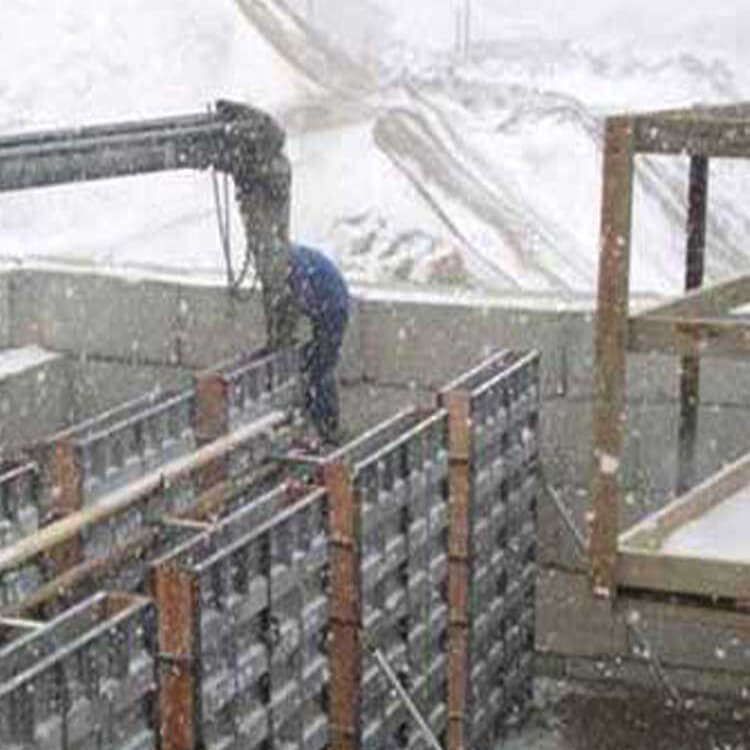
Air Entraining Admixtures (AEA™) is a highly effective liquid additive designed specifically to create concrete air entrainment. Extensive research on concrete durability has demonstrated that incorporating Air Entraining Admixtures significantly enhances the material’s resistance to the damaging effects of freeze-thaw cycles. In addition, these admixtures are specifically formulated to enhance the concrete’s surface resistance against chemical deicers, preventing surface peeling and deterioration.
Introducing small and uniform air bubbles throughout the concrete mixture, AEA™ helps improve concrete structures’ overall performance and longevity. It provides enhanced protection against the expansion and contraction caused by repeated freezing and thawing cycles, which can lead to cracking and structural damage. Furthermore, the admixture’s unique formulation offers superior resistance to the corrosive effects of chemical deicers commonly used on roads and other infrastructure.
AEA™ is a versatile solution suitable for various concrete applications, including concrete roads, bridge slabs, tables, and other projects exposed to water and demanding environmental conditions. With its high-quality composition and proven effectiveness, AEA™ offers exceptional reliability and durability in all concrete mixing projects.
By incorporating AEA™ Air Entraining Admixtures into your concrete formulations, you can ensure long-lasting performance, improved durability, and enhanced resistance against freeze-thaw cycles and chemical deicers, ultimately extending the lifespan of your concrete structures.
Air Entraining Admixtures
Air entraining admixtures (AEA™ code) are chemical additives for concrete that produce small and uniform air bubbles within the mixture. These admixtures are highly recommended for concretes that will be exposed to water, freeze-thaw cycles, and de-icing materials. They are commonly used in various applications, such as concrete roads, tables, and bridge slabs. Afzir concrete Air entraining admixture is renowned for its exceptional quality and can be utilized in all types of concrete mixing projects. According to the American Concrete Association’s report, Air entraining admixtures are defined as additives that induce the formation of microscopic air bubbles in concrete, mortar, and cement paste during the mixing process. These materials generate very small air bubbles that are evenly distributed throughout the volume of the concrete or mortar, and they should remain in place after the hardening of the material.
PRODUCT DESCRIPTION Air Entraining Admixtures
Features Air Entraining Admixtures
- Increasing the durability of concrete against thawing-freezing cycle
- Increasing the resistance of concrete against peeling
- Increasing efficiency and fluidity of concrete
- Reducing the separation of concrete grains and concrete water
- Reducing the weight of concrete
Applications Air Entraining Admixtures
- AEA™ is recommended for use whenever air entrained concrete is desired
packaging
- –
Product color
- Light Brown
Technical specifications and implementation Air Entraining Admixtures
|
Physical state |
liquid |
|
chloride |
no |
| density |
1.01±0.020g/cm3 |
|
PH |
12±1.0 |
| Shelf time |
9 months |
- Understand Concrete Requirements: Understand project requirements and environmental conditions clearly.
- Test and Validate: Conduct thorough laboratory tests to confirm the effectiveness of the chosen admixture.
- Accurate Dosage Measurement: Precisely measure the dosage to ensure desired performance.
- Mix Design Adjustment: Mix design to maintain workability and achieve desired air void system.
- Quality Admixture Selection: Choose reputable admixture manufacturers complying with industry standards.
- Proper Mixing Procedures: Train personnel on correct mixing techniques for uniform dispersion.
- Monitor Concrete Placement: Avoid segregation and over-vibration during concrete placement.
- Field Testing and Quality Control: Regularly test and control air content to meet specifications.
- Environmental Considerations: Account for curing conditions’ impact on air void stability.
- Continuous Learning: Stay updated on industry advancements and best practices.
- Understand Project Specifications: Familiarize yourself with project requirements and air entrainment specifications.
- Collaborate with Engineers: Maintain communication with engineers for guidance on dosage and admixture selection.
- Select Reliable Admixtures: Choose reputable manufacturers with proven, high-quality products.
- Adhere to Manufacturer Guidelines: Follow the dosage and mixing instructions provided by the manufacturer.
- Proper Mixing Techniques: Train personnel in proper mixing techniques for uniform dispersion.
- Monitor Air Content: Regularly test the air content in fresh concrete to ensure desired air void system.
- Quality Control: Establish quality control processes to ensure consistent concrete production.
- Communication with Construction Team: Coordinate with the team to avoid practices that affect the Air void system.
- Storage and Handling: Properly store and handle admixtures to maintain their integrity.
- Documentation and Reporting: Maintain records of admixture usage, dosage, and testing results for future reference.
Consumption of Air Entraining Admixtures:
The amount of Air Entraining Admixtures required in concrete varies depending on the existing air content, which differs based on materials and environmental conditions. Factors such as temperature, cement content and type, and sand grading are crucial in determining the additive quantities. To ensure proper control, the air content in the concrete should be monitored during construction. If necessary, adjustments can be made to increase or decrease the amount of Air Entraining Admixtures to achieve the desired air content.Additive Distribution and Mixing:
Air Entraining Admixtures can be incorporated into the concrete mixture using specialized devices designed for uniform distribution or precise measuring devices with an accuracy of ±3%. For optimal performance, evenly distributing the admixtures in well-graded concrete is recommended. Field evaluations should be conducted for concrete mixes containing lightweight aggregates to determine the most effective distribution method.- Admixture Selection: Choose high-quality and suitable Air Entraining Admixtures from reputable manufacturers.
- Admixture Storage: Store the admixtures correctly in a controlled environment.
- Admixture Testing: Regularly test the admixture’s performance, stability, and compatibility.
- Dosage Measurement: Accurately measure the admixture dosage using calibrated devices.
- Mixing Procedure: Ensure proper mixing techniques for uniform dispersion of the admixture.
- Air Content Monitoring: Implement a comprehensive program to monitor air content in the concrete.
- Field Testing: Conduct regular field tests to verify air content in hardened concrete.
- Documentation: Maintain detailed records of quality control activities.
- Communication: Foster effective communication among relevant stakeholders.
- Continuous Improvement: Evaluate and improve quality control procedures for enhanced performance.


Reviews
There are no reviews yet.